MUMBAI: Capital of about $85 billion earmarked for building huge steel mills and oil refineries could be at risk because the projects are planned in Red Corridor - a Maoists-controlled swathe across India, the second-fastest growing economy in the world.
Investments in five states, including foreign direct input of about $32 billion, could be at risk because of escalating maoist violence that has already claimed 374 lives in 550 attacks in first six months this year, foreign broking firm CLSA has warned.
"Private sector investment, vital to the overall development of any region, may not take place if the government cannot find a sustainable solution to what it insists is a law-and-order problem," CLSA said in a special report on Naxalism released a day after the serial bombing of Mumbai's suburban rail network.
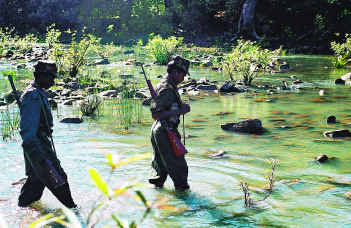
Large corporations such as metal giants Posco, Mittal and Vedanta and refiners like IOC and Reliance Industries have all lined up plans for billion-dollar investments in the natural resources-rich Chattisgarh, Karnataka, Jharkhand, Orissa, and Andhra Pradesh, where armed Maoist guerrillas hold the impoverished tribal natives in complete sway.
The report, widely circulated among the brokers'scores of clients, is said to have made many foreign investors sit up and take note.
"I was shocked at the extent of the problem. I did not know it was so deep-rooted,"said an investment advisor to several portfolio funds after reading the report.
His reaction was shared by many others who, even though had seen sporadic news items of Maoist violence in the hinterlands, had not reckoned the gravity or absence of government in these regions.
"Lack of policy initiatives and the inability to win over the tribals, the largest stakeholder in the hinterlands where the Maoists hold sway, means the Naxalite movement is becoming stronger,"Anirudha Dutta, author of the report, says.
"While it may wax and wane in significance, Naxalite activity continues to simmer and threatens to explode if adequate steps are not taken urgently. Apart from the human costs involved, it will continue to exact a heavy toll on India's economy. There are, however, few signs the government is taking any urgent steps and it remains to be seen how and when it does respond to this major 'challenge', Dutta says in the 31-page report that traces the Naxalite movement from the late 60's.
The CLSA report underlines what many social commentators and economists have been warning for some time now. It quotes PM Manmohan Singh as telling a standing committee meeting of CMs that Naxalites and their Maoist-inspired movement was "the single biggest internal security challenge ever faced by our country".
Singh told ministers that "it (Maoist movement) has gained in strength and has spread to cover 160 out of the 602 districts in the country."
That is more than a quarter of the country, but CLSA estimates that nearly 225 districts or about a third of the nation is affected. Those are districts richest in minerals, metals, oil and gas and forests.
Maoists now believed to control a 92,000 sq km contiguous swathe known as Red corridor beginning in Bihar's jungles on the edge of Nepal (the high seat of Maoism today) and running all the way down to north Kerala at the bottom of the Indian peninsula. Naxalites, who reportedly run a parallel government there, call it the "Dandakaranya Liberated Zone."
These areas are some of the most underdeveloped regions and the guerrillas'writ runs there because they are usually the only protection from exploitative locals and government officials.
When they are not blowing up government establishments, armed Naxalites help the tribals get means of livelihood sometimes by forcing landowners to give up land and often enforcing minimum wages for labourers. They also hold people's courts and help build basic infrastructure such as schools and wells.
"This is something that can be negotiated," said an economist with a large group that is planning to make investments in Orissa.
Link
Sunday, July 23, 2006


Thursday, July 20, 2006
Muppalla Lakshman Rao alias Ganapathi
Muppalla Lakshman Rao

The People's War always repays it's blood debt - Muppalla Lakshman Rao, alias Ganapati, general secretary and leader of the CPI (Maoist).
The People's War always repays it's blood debt - Muppalla Lakshman Rao, alias Ganapati, general secretary and leader of the CPI (Maoist).
'Before I am killed, give me a signal so I can shout a slogan'
'Before I am killed, give me a signal so I can shout a slogan'
After combing the Thirunelli forests for two days, the Central Reserve Police Force posse set up camp near a local temple. They had sighted Varghese and his comrades winding their way through the trees the day before. But the Naxalites had given them the slip, setting off a country bomb in their wake which left a constable badly injured.
The next morning, the police received a tip-off that Varghese was holed up in a house occupied by one Sivaraman Nair, who served as caretaker to an elderly widow called Ittichiri Manayamma, a known ally of the Naxalites.
The police team approached the house and rapped on the front door. 'Who's there?' asked a voice from within. The police announced their presence. The voice ranged out: 'Nair, have you betrayed me?' The cops stormed the door and entered. Varghese stood with his arms up in the air. He smiled: 'Don't worry. I'm alone and unarmed.' The Naxalite leader was led out, wrists bound with a rifle sling, and bundled into a jeep.
Thirty minutes down the road, en route to Manathavady, they were joined by a convoy of police vehicles. Constable Ramachandran Nair says he recognised DSP Lekshmana and DIG Vijayan in one of the jeeps.
''Varghese turned to us,'' Nair recalls. 'They are going to kill me,' he told us. 'One of you will have to do it. I have one request. Before I am killed, give me a signal so that I can shout a slogan.' He was so calm when he said that.'''
It was 1400 hours. A cop walked up to Varghese and blindfolded him. The policemen settled down to eat. Constabtle Nair shared his food with the prisoner. He also offered him a bidi. At 1830 hours, Lekshmana addressed the constables guarding the Naxalite leader. Nair recreates the sequence of events: ''Lekshamana told us that Varghese was going to be shot. DIG Vijayan was standing nearby. Then Lekshmana ordered those of us who were willing to shoot Varghese to raise their hands. Rappai and Sreedharan raised their hands. Haneefa hesitated but finally raised his. I did not.''
The prisoner should be produced in court, Nair reasoned with his superior. ''Lekshmana reminded me that policemen could die in accidents. I recognised the threat. Varghese was going to die anyway. If I died, my family would be helpless,'' Nair ended his resistance.
The dissenter was then chosen to perform the deed. Nair looked at his target. He winces at the memory: ''Varghese was sitting between two rocks. He was calm but alert, as though he was waiting for something to happen and wondering why it wasn't happening. I went up to him and rested the nozzle of my rifle on the left side on his chest. Then I remembered his request. I sounded a signal with my tongue. 'Long live the revolution,' he shouted and I pulled the trigger. He fell over.''
Another cop then fired a shot in the air and put the weapon in Varghese's lifeless hand. The encounter death was complete.
Link
After combing the Thirunelli forests for two days, the Central Reserve Police Force posse set up camp near a local temple. They had sighted Varghese and his comrades winding their way through the trees the day before. But the Naxalites had given them the slip, setting off a country bomb in their wake which left a constable badly injured.
The next morning, the police received a tip-off that Varghese was holed up in a house occupied by one Sivaraman Nair, who served as caretaker to an elderly widow called Ittichiri Manayamma, a known ally of the Naxalites.
The police team approached the house and rapped on the front door. 'Who's there?' asked a voice from within. The police announced their presence. The voice ranged out: 'Nair, have you betrayed me?' The cops stormed the door and entered. Varghese stood with his arms up in the air. He smiled: 'Don't worry. I'm alone and unarmed.' The Naxalite leader was led out, wrists bound with a rifle sling, and bundled into a jeep.
Thirty minutes down the road, en route to Manathavady, they were joined by a convoy of police vehicles. Constable Ramachandran Nair says he recognised DSP Lekshmana and DIG Vijayan in one of the jeeps.
''Varghese turned to us,'' Nair recalls. 'They are going to kill me,' he told us. 'One of you will have to do it. I have one request. Before I am killed, give me a signal so that I can shout a slogan.' He was so calm when he said that.'''
It was 1400 hours. A cop walked up to Varghese and blindfolded him. The policemen settled down to eat. Constabtle Nair shared his food with the prisoner. He also offered him a bidi. At 1830 hours, Lekshmana addressed the constables guarding the Naxalite leader. Nair recreates the sequence of events: ''Lekshamana told us that Varghese was going to be shot. DIG Vijayan was standing nearby. Then Lekshmana ordered those of us who were willing to shoot Varghese to raise their hands. Rappai and Sreedharan raised their hands. Haneefa hesitated but finally raised his. I did not.''
The prisoner should be produced in court, Nair reasoned with his superior. ''Lekshmana reminded me that policemen could die in accidents. I recognised the threat. Varghese was going to die anyway. If I died, my family would be helpless,'' Nair ended his resistance.
The dissenter was then chosen to perform the deed. Nair looked at his target. He winces at the memory: ''Varghese was sitting between two rocks. He was calm but alert, as though he was waiting for something to happen and wondering why it wasn't happening. I went up to him and rested the nozzle of my rifle on the left side on his chest. Then I remembered his request. I sounded a signal with my tongue. 'Long live the revolution,' he shouted and I pulled the trigger. He fell over.''
Another cop then fired a shot in the air and put the weapon in Varghese's lifeless hand. The encounter death was complete.
Link
Subscribe to:
Posts (Atom)