Showing posts with label Blogs. Show all posts

Thursday, March 19, 2009

Iranian Blogger Reported Dead in Prison


Iranian Blogger Reported Dead in Prison

Omid Reza Misayafi, one of a number of Iranian bloggers arrested for "insulting" the OmidMisayafigovernment and religious authorities in that country, is dead. Misayafi's death was reported on Global Voices Onlinevia an Iranian human rights site in Farsi and we learned of it from The Committee to Protect Bloggers.

No cause of death is yet known, but the Committee says torture of bloggers is common in Iran and they are usually placed in close proximity with the most dangerous criminals in any facility. Misayafi was sentenced in December to 30 months in prison "for insulting Islamic Republic Leaders." The man said he was a cultural blogger, not a political one, and only wrote a few satirical articles that got him into trouble.

An update tonight indicates that the prison conditions may have lead the man to take his own life. Directly or indirectly, it appears that Misayafi's life has been brought to an end for exercising free speech, for criticizing an authoritarian state and for doing it using online social media. Social media users and advocates around the world should take note of this event.

We've reported here on a number of bloggers imprisoned in Iran and in Egpyt for documenting government abuses or just writing critical words about governments that demand total compliance. In the middle of last year we wrote about Iran's parliament debating legislation that would add the death penalty to the list of possible punishments for using blogs to challenge government authority

Read it all.

Sunday, March 08, 2009

Supreme Court verdict on Blogging

Ahh... the days of the wild wild west are over ... it seems...

Bloggers can be nailed for views

NEW DELHI: A 19-year-old blogger's case could forever change the ground rules of blogging. Bloggers may no longer express their uninhibited views on everything under the sun, for the Supreme Court said they may face libel and even prosecution for the blog content.

It will no longer be safe to start a blog and invite others to register their raunchy, caustic and even abusive comments on an issue while seeking protection behind the disclaimer — views expressed on the blog are that of the writers.

This chilling warning emerged as a Bench comprising Chief Justice K G Balakrishnan and Justice P Sathasivam refused to protect a 19-year-old Kerala boy, who had started a community on Orkut against Shiv Sena, from protection against summons received from a Maharashtra court on a criminal case filed against him.

Petitioner Ajith D had started a community on Orkut against Shiv Sena. In this community, there were several posts and discussions by anonymous persons who alleged that Shiv Sena was trying to divide the country on region and caste basis.

Reacting to these posts, the Shiv Sena youth wing's state secretary registered a criminal complaint at Thane police station in August 2008 based on which FIR was registered against Ajith under Sections 506 and 295A pertaining to hurting public sentiment.

After getting anticipatory bail from Kerala HC, Ajith moved the Supreme Court through counsel Jogy Scaria seeking quashing of the criminal complaint on the ground that the blog contents were restricted to communication within the community and did not have defamation value. He also pleaded that there was threat to his life if he appeared in a Maharashtra court.

A computer science student, Ajith pleaded that the comments made on the blog were mere exercise of their fundamental right to freedom of expression and speech and could not be treated as an offence by police.

Unimpressed, the Bench said, "We cannot quash criminal proceedings. You are a computer student and you know how many people access internet portals. Hence, if someone files a criminal action on the basis of the content, then you will have to face the case. You have to go before the court and explain your conduct."

Times of India.

Thursday, January 01, 2009

New law will let govt snoop on your PC

NEW DELHI: Your email or the personal contents of your computer could soon be under the government's scrutiny without your knowledge.

With Parliament on Tuesday passing a bill which stipulates life imprisonment for those indulging in cyber terrorism and giving the government endless power to "intercept or monitor any information through any computer resource," experts fear that "unauthorised interceptions could soon become common".

Calling for setting up of an independent authority to review complaints of unauthorised interceptions, cyber law expert Pavan Duggal told TOI that the bill was bound to infringe on civil liberties like right to privacy or right to anonymous communication with legitimate purposes, because no safeguards had been put in place to prevent such abuse.

Calling the bill "a hurried reaction", Duggal said, "The potential for misuse of these powers stipulated by the bill for political gains can't be ruled out."

There also appears to be no effective remedy or mechanism to appeal against unauthorised interception, Duggal said. "Once it becomes law, the government will have sovereign and blanket power to intercept or peep into any electronic communication of even legitimate citizens. Because the bill states that safeguards would be stipulated at a later date, it would clamp down on civil liberties right away. While we are concerned about national security, we don't want these interception mechanisms to become a handle for misuse," he added.

"There has to be a proper balance between contradictory subjects of interception and privacy. So safeguards are critical," the expert said. The Information Technology (Amendment) Bill 2008 also empowers the government with absolute power to block websites in national interest.

The government's move to bring in new provisions to tackle cyber terrorism comes after repeated instances of terrorists using the web to propagate mayhem and claim responsibility after every act.

For those indulging in cyber terrorism, the new legislation provides for stiff penalty of life imprisonment. The bill also says that dishonestly receiving stolen computer resource, identity theft, cheating by personation by using computer resource and violation of privacy will result in imprisonment upto three years apart from fine between Rs 1 lakh to Rs 10 lakh.

Transmitting material containing sexually explicit acts in electronic form would be punishable by imprisonment of upto five years along with a fine of upto Rs 10 lakh.

Emphasising on the overriding power given to government, a senior IT official pointed out that Section 69 of the original Act had given the central government the power to intercept and monitor any information through computer systems
in national interest, permitting it to monitor any potentially cognisable offence.

ET

Thursday, November 20, 2008

Growing Harrasment and Surveillance of bloggers - A cause for concern

It seems our assessment sometime back that an increase in surveillance
and monitoring of the internet under India's undeclared emergency
will result in serious repercussions in coming days for bloggers
blogging on sensitive political issues has been proved right.

Anti-Raj blog lands north Indian techie in trouble

Beware bloggers. Never vent your fury on the internet, using abusive language. A Kandivili-based electronic and telecommunication engineer, hailing from north India, did just that, and Crime Branch came calling.

Rajat Trivedi (name changed), 27, spewed venom at Maharashtra Navnirman Sena (MNS) chief Raj Thackeray, saying people like him “should be killed”, in a four-page blog - ‘Truth about the Kurla bus encounter’. It also accused Mumbai police of gunning down Patna youth Rahul Raj in a fake encounter aboard a BEST double-decker.

Sleuths of the Cyber Crime Investigation Cell came across the blog on November 6. The internet protocol (IP) address of the user was traced to Thakur Complex in Kandivili (East). Later, sleuths paid Trivedi a visit at his home and recorded his statement.

Asked whether Crime Branch was violating the freedom of speech and expression, guaranteed to people by the Constitution, by monitoring blogs and community websites, Maria said, “A person has the right to state his views on political issues. But, in this case, Trivedi is inciting people to resort to violence. He can’t do that.”


The blogger was forced to delete what he had posted and you can read
his edited post here.

Apparently the Mumbai Cyber Crime Investigation cell wants
bloggers to read their Cyber Laws..

http://www.cybercellmumbai.com/cyber-laws/


Just last week Karnataka Home Minister V S Acharya admitted that the extremists were way ahead of the police both in terms of technology and innovative techniques.

While Mr Yediyurappa the CM of Karnataka stressed on the need for legislation on cyber crime,

Newsarticle

It is not clear as to whom these esteemed and distinguished gentlemen are referring to.. :)


Harassment and surveillance is only going to increase in the coming days..

Saturday, September 13, 2008

The End


I am done with publishing news and articles about Maoists .

It can get a little monotonous, copy pasting information about
two groups of people who have been killing each other for the last
40 years.

As I have previously mentioned on this blog , I am no Maoist.

I do not agree with their current methods and neither would I recommend
this path to anyone as of now , even though I had different views when I
had started this blog way back in 2006.

I do not want to bore you all with another post as to why I am not a Maoist
for I have made some of the reasons clear in my previous posts.

One of the reasons why I had restarted this blog was to publish
some pending articles which has now been accomplished.

It would be extremely hypocritical on my part to continue
with this pro-maoist blog.

Also there are hundreds of pro-maoist blogs now so the necessity of
this blog has diminished considerably.

The home page of Naxalrevolution shall henceforth carry an index
of important articles which I will compile in the coming days and
there will be no more regular posts.

I thank all bloggers and readers for their co-operation
and encouragement over the last two years.

As for my future course of action, it looks like I am going
to enroll for my masters in one of the social sciences.

In today's world, irrespective of which field one is working in or
studying in, it is imperative to maintain an online presence,
if they wish to be at the cutting edge of their chosen field.
So if I feel the necessity to start another blog , a non political one
I will post about it here.

Regards

Abhay

For Team Naxalrevolution

How to blog anonymously using Wordpress and Tor

As reports appearing in the online media indicate
Blogger arrests are on the rise all over the world and
India is no exception.

In this changing political scenario bloggers must take adequate precaution
while blogging on sensitive subjects.

The risks involved in non-anonymous blogging has gone up manifold
making the risk - reward ratio extremely unfavorable in my opinion.

While there is nothing we can do about non-anonymous bloggers
who have been blogging for some time now, it is advisable that in
future new bloggers should publish anonymously.

Thanks to the efforts of Global Voices which seeks to build a global anti-censorship network of bloggers and online activists throughout the developing world and is dedicated to protecting freedom of expression and free access to information online we have one of the easiest
guides to online blogging available.

Anonymous blogging cannot get easier than this step by step method.

I wish all future bloggers success in their blogging ventures.

Anonymous Blogging with Wordpress & Tor

Download this guide as a pdf

An early draft of this guide was written by Ethan Zuckerman on April 13, 2005 and updated on October 1, 2006. On August 8, 2007 Global Voices Advocacy published an updated and linkable, blogging-friendly, HTML version of the guide, along with a downloadable PDF file.

Download as PDF File at below link
Anonymous Blogging with Wordpress and Tor

By Ethan Zuckerman

Anonymous Blogging with Wordpress and Tor


Introduction

One of the great joys of working on Global Voices has been having the chance to work with people who are expressing themselves despite powerful forces working to keep them silent. I’ve worked with a number of authors who’ve wanted to write about political or personal matters online, but who felt they couldn’t write online unless they could ensure that their writing couldn’t be traced to their identity. These authors include human rights activists in dozens of nations, aid workers in repressive countries as well as whistleblowers within companies and governments.

I wrote a technical guide to anonymous blogging some months back and posted it on Global Voices, outlining several different methods for blogging anonymously. Since then, I’ve led workshops in different corners of the world and have gotten comfortable teaching a particular set of tools - Tor, Wordpress and various free email accounts - which used in combination can provide a very high level of anonymity. The guide that follows below doesn’t offer you any options - it just walks you through one particular solution in detail.

You can feel free to ignore the “why” sections of the guide if you want a quicker read and if you’re the sort of person who doesn’t need to know why to do something. I hope to format this more prettily at some point in the future, allowing the “why” sections to be expanded and compressed, making the whole document a lot shorter.

If I’ve been unclear somewhere in the document or got something wrong, please let me know in the comments - this is a draft which I hope to clean up before posting it on Global Voices. Should you find it useful and want to disseminate it further, feel free - like almost everything on this site, it’s licensed under a Creative Commons 2.5 Attribution license, which means you’re free to print it on coffee cups and sell them, if you think there’s a market and money to be made.


Disclaimer

If you follow these directions exactly, you’ll sharply reduce the chances that your identity will be linked to your online writing through technical means - i.e., through a government or law enforcement agency obtaining records from an Internet Service Provider. Unfortunately, I cannot guarantee that they work in all circumstances, including your circumstances, nor can I accept liability, criminal or civil, should use or misuse of these directions get you into legal, civil or personal trouble.

These directions do nothing to prevent you from being linked through other technical means, like keystroke logging (the installation of a program on your computer to record your keystrokes) or traditional surveillance (watching the screen of your computer using a camera or telescope). The truth is, most people get linked to their writing through non-technical means: they write something that leaves clues to their identity, or they share their identity with someone who turns out not to be trustworthy. I can’t help you on those fronts except to tell you to be careful and smart. For a better guide to the “careful and smart” side of things, I recommend EFF’s “How to Blog Safely” guide.

Onto the geekery:

Step 1: Disguise your IP.

Every computer on the internet has or shares an IP address. These addresses aren’t the same thing as a physical address, but they can lead a smart system administrator to your physical address. In particular, if you work for an ISP, you can often associate an IP address with the phone number that requested that IP at a specific time. So before we do anything anonymous on the Internet, we need to disguise our IP.

What to do if you want to blog from your home or work machine:

a) Install Firefox. Download it at the Mozilla site and install it on the main machine you blog from.

install-firefox

Why?
Internet Explorer has some egregious security holes that can compromise your online security. These holes tend to go unpatched for longer on IE than on other browsers. (Don’t believe me? Ask Bruce Schneier.) It’s the browser most vulnerable to spyware you might inadvertently download from a website. And many of the privacy tools being released are being written specifically to work with Firefox, including Torbutton, which we’ll be using in a future step.

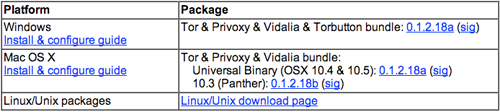
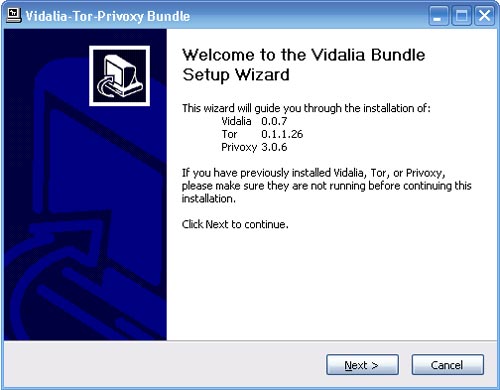
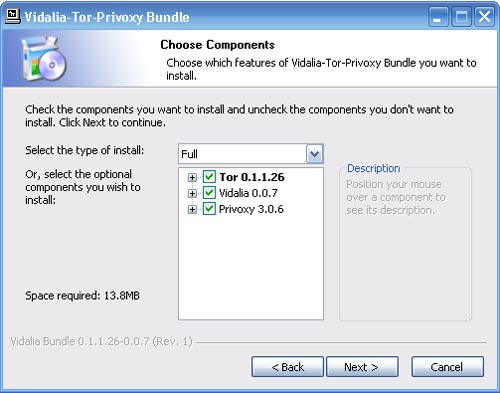
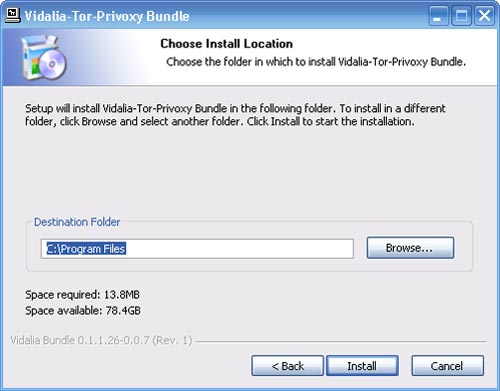
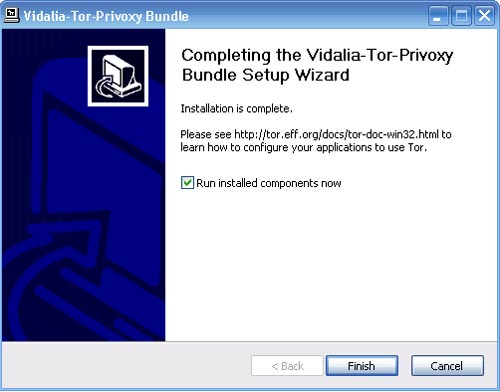
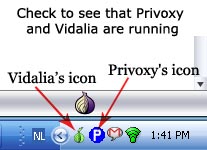
b) Install Tor. Download the program from the Tor site. If access to Tor main website is blocked in your country, there are a few mirrors of it in other places where it can also be downloaded from. Pick the “latest stable release” for your platform and download it onto your desktop. Follow the instructions that are linked to the right of the release you downloaded. You’ll install two software packages and need to make some changes to the settings within your new installation of Firefox.

install-tor

wizard1

wizard2

wizard3

wizard4

Why?
Tor is a very sophisticated network of proxy servers. Proxy servers request a web page on your behalf, which means that the web server doesn’t see the IP address of the computer requesting the webpage. When you access Tor, you’re using three different proxy servers to retrieve each webpage. The pages are encrypted in transit between servers, and even if one or two of the servers in the chain were compromised, it would be very difficult to see what webapge you were retrieving or posting to.

Tor installs another piece of software, Privoxy, which increases the security settings on your browser, blocking cookies and other pieces of tracking software. Conveniently, it also blocks many ads you encounter on webpages.

install_torbutton5

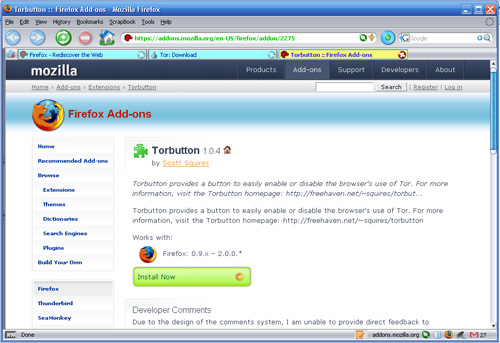
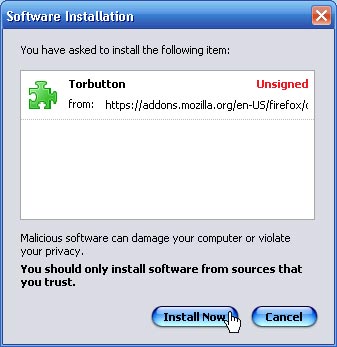
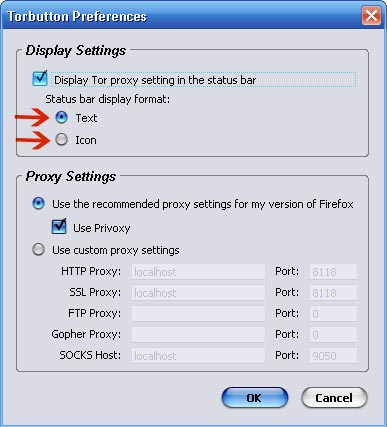
c) Install Torbutton. Read about it and install it, following the instructions on the installation page. You’ll need to be using Firefox to install it easily - from Firefox, it will simply ask you for permission to install itself from the page mentioned above.

install_torbutton

nstall_torbutton2

Why?
Turning on Tor by hand means remembering to change your browser preferences to use a proxy server. This is a muiltistep process, which people sometimes forget to do. Torbutton makes the process a single mouse click and reminds you whether you’re using Tor or not, which can be very helpful.

You may find that Tor slows down your web use - this is a result of the fact that Tor requests are routed through three proxies before reaching the webserver. Some folks - me included - use Tor only in situations where it’s important to disguise identity and turn it off otherwise - Torbutton makes this very easy.

install_torbutton3

install_torbutton4

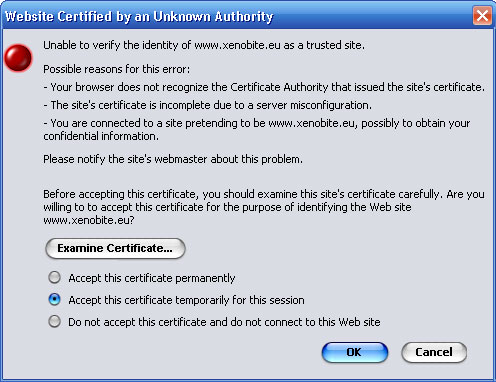
d) Turn on Tor in Firefox and test it out. With Tor turned on, visit this URL (https://torcheck.xenobite.eu/). By clicking, you will get a security alert dialog box - unable to verify the identity of xenobite.eu as a trusted site. Click OK in order to accept the self-signed certificate for that particular session.

Accept Tor Check

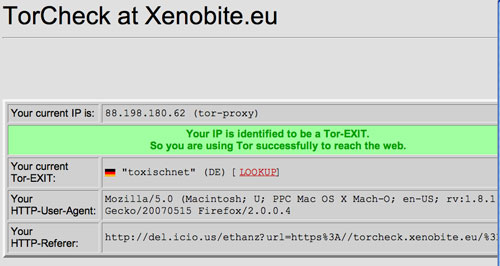
After clicking, if you get this message telling you, “Your IP is identified to be a Tor-EXIT. So you are using Tor successfully to reach the web.”, then you’ve got everything installed correctly and you’re ready for the next step.

Tor Check yes

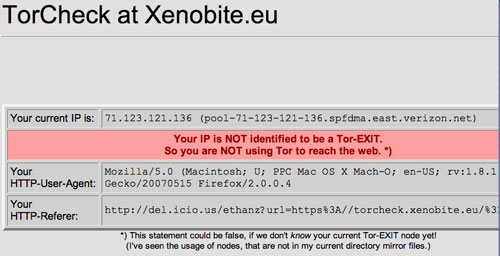
Otherwise you will get this message telling you that “Your IP is NOT identified to be a Tor-EXIT. So you are not using Tor to reach the web”.

Tor Check no

Why?
It’s always a good idea to see whether the software you’ve installed works, especially when it’s doing something as important as Tor is. The page you’re accessing is checking to see what IP address your request is coming from. If it’s from a known Tor node, Tor is working correctly and your IP is disguised - if not, something’s wrong and you should try to figure out why Tor isn’t working correctly.

Alternative instructions if you’re going to be writing primarily from shared computers (like cybercafe computers) or you’re unable to install software on a computer.

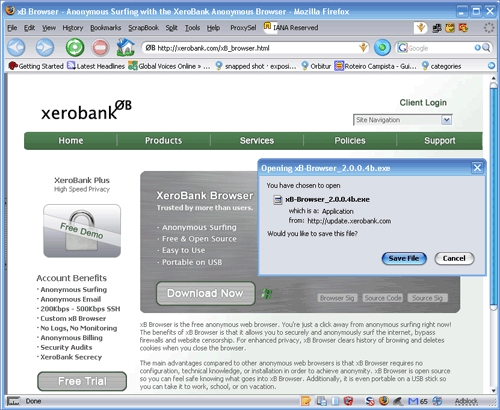
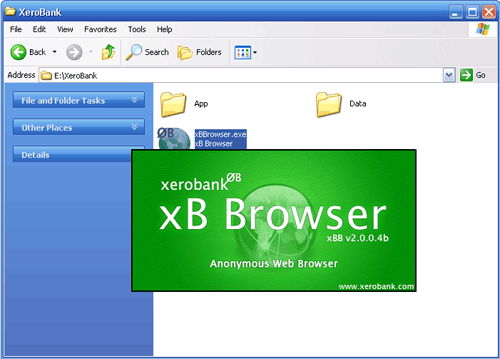
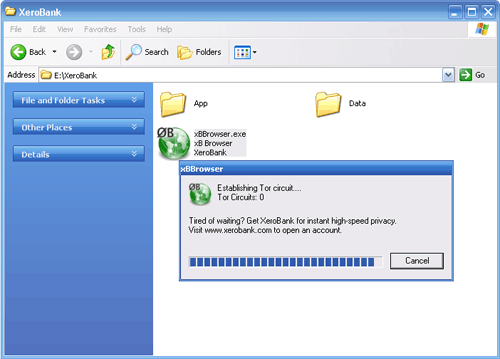
a) Download XeroBank Browser (xB Browser) or alternatively Tor on a Stick (ToaSt). Download the package from the xB Browser site onto a computer where you can save files. Insert your USB key and copy the xB-Browser.exe onto the key. Using this USB key and any Windows computer where you can insert a USB key, you can access a Tor-protected browser. On this shared computer, quit the existing web browser. Insert the key, find the key’s filesystem on the Desktop, and double-click the xB-Browser_latest.exe. This will launch a new browser which accesses the web through Tor.

download xerobank

run xerobank

Install xerobank

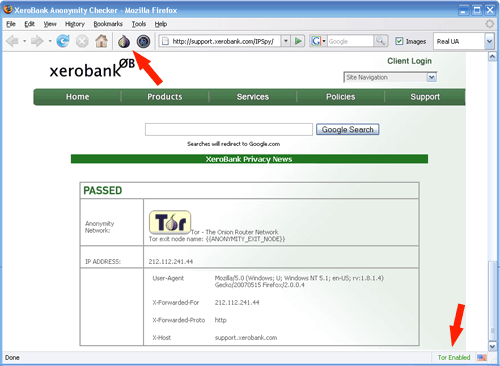
b) Test that XeroBank Browser is working by visiting the Tor test site with the Tor-enabled browser and making sure you get a “Your IP is identified to be a Tor-EXIT” message.

xerobank Enabled

Why?
XeroBank is a highly customized version of the Firefox browser with Tor and Privoxy already installed. It’s designed to be placed on a USB key so that you can access Tor from shared computers that don’t permit you to install software. While I recommend XeroBank and use it when I travel, it is not formally supported by the folks behind Tor - they’re not happy that early versions of the program weren’t released with source code, which meant that it was impossible to determine precisely what XeroBank did and how it used Tor’s source code. A more recent version of the program includes source code - it will be interesting to see whether Tor’s programmers offer their blessing of this version. Roger Dingledine of Tor has also indicated that he and his colleagues are planning an open source version of a portable browser with Tor installed, but the timeline for this new project is unknown.

Step 2: Generate a new, hard to trace email account.

Most web services - including blog hosting services - require an email address so that they communicate with their users. For our purposes, this email address can’t connect to any personally identifiable information, including the IP address we used to sign up for the service. This means we need a new account which we sign up for using Tor, and we need to ensure that none of the data we use - name, address, etc. - can be linked to us. You should NOT use an existing email account - it’s very likely that you signed up for the account from an undisguised IP, and most webmail providers store the IP address you signed up under.

a) Choose a webmail provider - we recommend Hushmail, Vaultletsof and Gmail, but as long as you’re using Tor, you could use Yahoo or Hotmail as well. Also, you can easily register a free and quick webmail account with fastmail.fm.

webmail providers

Why?
Webmail is the best way to create a “disposeable” email address, one you can use to sign up for services and otherwise ignore. But a lot of users also use webmail as their main email as well. If you do this, it’s important to understand some of the strengths and weaknesses of different mail providers.

Hotmail and Yahoo mail both have a “security feature” that makes privacy advocates very unhappy. Both include the IP address of the computer used to send any email. This isn’t relavent when you’re accessing those services through Tor, since the IP address will be a Tor IP address, rather than your IP address. Also, Hotmail and Yahoo don’t offer secure HTTP (https) interfaces to webmail - again, this doesn’t matter so long as you use Tor every time you use these mail services. But many users will want to check their mail in circumstances where they don’t have Tor installed - for your main webmail account, it’s worth choosing a provider that has an https interface to mail.

Hushmail provides webmail with a very high degree of security. They support PGP encryption - which is very useful if you correspond with people who also use PGP. Their interface to webmail uses https and they don’t include the sending IP in outgoing emails. But they’re a for-profit service and they offer only limited services to non-paying users. If you sign up for a free account, you have to log into it every couple of weeks to make sure the system doesn’t delete it. Because they’re aggresive about trying to convert free users to paid users, and because their system uses a lot of Java applets, some find that Hushmail isn’t the right choice for them.

Gmail, while it doesn’t advertise itself as a secure mail service, has some nice security features built in. If you visit this special URL, your entire session with Gmail will be encrypted via https. (I recommend bookmarking that URL and using it for all your Gmail sessions.) Gmail doesn’t include the originating IP in mail headers, and you can add PGP support to Gmail by using the FreeEnigma service, a Firefox extension that adds strong crypto to Gmail (it works with other mail services as well.)

A warning on all webmail accounts - you’re trusting the company that runs the service with all your email. If that company gets hacked, or if they are pressured by other governments to reveal information, they’ve got access to the text of all the mails you’ve received and sent. The only way around this is to write your mails in a text editor, encrypt them on your own machine using PGP and send them to someone also using PGP. This is way beyond the level of secrecy most of us want and need, but it’s important to remember that you’re trusting a company that might or might not have your best interests at heart. Yahoo, in particular, has a nasty habit of turning over information to the Chinese government - Chinese dissidents are now suing the company for illegal release of their data. Just something to think about when you decide who to trust…

b) Turn Tor on in your browser, or start XeroBank. Visit the mail site of your choice and sign up for a new account. Don’t use any personally identifiable information - consider becoming a boringly named individual in a country with a lot of web users, like the US or the UK. Set a good, strong password (at least eight characters, include at least one number or special character) for the account and choose a username similar to what you’re going to name your blog.

c) Make sure you’re able to log onto the mail service and send mail while Tor is enabled. It is most likely that Tor changes its circuit every 10 minutes and this could disrupt your webmail operations, so you should consider limiting the process of writing a new email to 10 minutes.

Step 3: Register your new anonymous blog

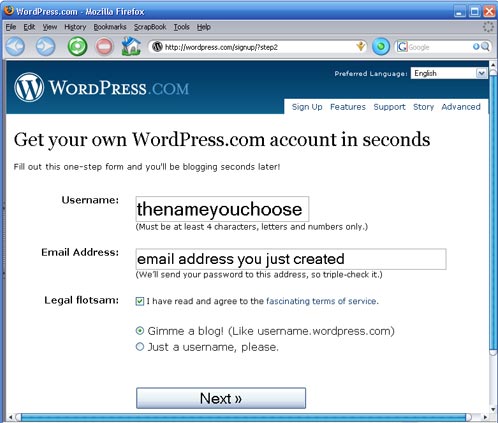
a) Turn Tor on in your browser, or start XeroBank. Visit Wordpress.com and sign up for a new account by clicking the “Get a New WordPress Blog” link. Use the email address you just created and create a username that will be part of your blog address: thenameyouchoose.wordpress.com

wordpress1

b) Wordpress will send an activation link to your webmail account. Use your Tor-enabled browser to retrieve the mail and follow that activation link. This lets Wordpress know you’ve used a live email account and that they can reach you with updates to their service - as a result, they’ll make your blog publicly viewable and send you your password. You’ll need to check your webmail again to retrieve this password.

c) Still using Tor, log into your new blog using your username and password. Click on “My Dashboard”, then on “Update your profile or change your password.” Change your password to a strong password that you can remember. Feel free to add information to your profile as well… just make sure none of that information is linked to you!

Step 4: Post to your blog

a) Write your blog post offline. Not only is this a good way to keep from losing a post if your browser crashes or your net connection goes down, it means you can compose your posts somewhere more private than a cybercafe. A simple editor, like Wordpad for Windows, is usually the best to use. Save your posts as text files (After blogging, always remember to remove these files from your machine completely, using a tool like Eraser or Ccleaner which is is available in many languages and wipes temporary files automatically from all installed browsers and other applications).
).

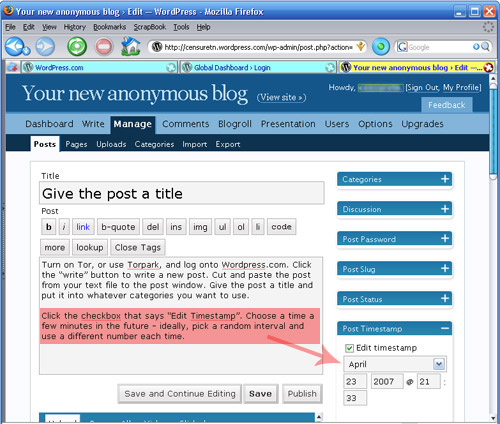
b) Turn on Tor, or use XeroBank, and log onto Wordpress.com. Click the “write” button to write a new post. Cut and paste the post from your text file to the post window. Give the post a title and put it into whatever categories you want to use.

c) Before you hit “Publish”, there’s one key step. Click on the blue bar on the right of the screen that says “Post Timestamp.” Click the checkbox that says “Edit Timestamp”. Choose a time a few minutes in the future - ideally, pick a random interval and use a different number each time. This will put a variable delay on the time your post will actually appear on the site - Wordpress won’t put the post up until it reaches the time you’ve specified.

wordpress2

Why?
By editing the timestamp, we’re protecting against a technique someone might use to try to determine your identity. Imagine you’re writing a blog called “Down with Ethiopia Telecommunications Company!” Someone at ETC might start following that blog closely and wonder whether one of their customers was writing the blog. They start recording the times a post was made on downwithetc.wordpress.com and check these timestamps against their logs. They discover that a few seconds before each post was made over the series of a month, one of their customers was accessing one or another Tor node. They conclude that their user is using Tor to post to the blog and turn this information over to the police.

By changing the timestamp of the posts, we make this attack more difficult for the internet service provider. Now they’d need access to the logs of the Wordpress server as well, which are much harder to get than their own logs. It’s a very easy step to take that increases your security.

Step 5: Cover your tracks

a) Securely erase the rough drafts of the post you made from your laptop or home machine. If you used a USB key to bring the post to the cybercafe, you’ll need to erase that, too. It’s not sufficient to move the file to the trash and empty the trash - you need to use a secure erasing tool like Eraser or Ccleaner which overwrites the old file with data that makes it impossible to retrieve. On a Macintosh, this functionality is built it - bring a file to the trash and choose “Secure Empty Trash” from the Finder Menu.

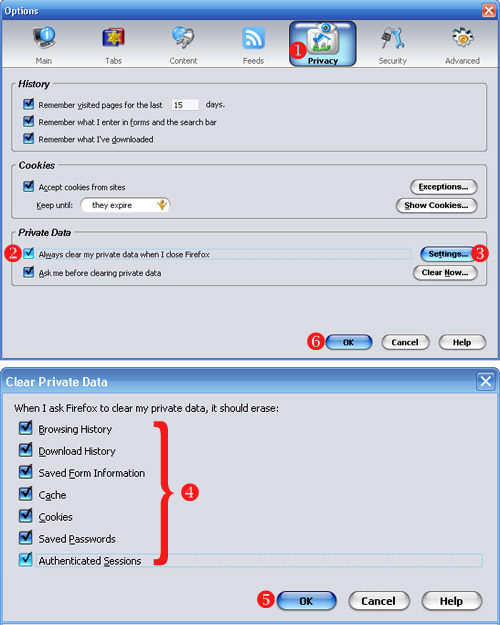
b) Clear your browser history, cookies and passwords from Firefox. Under the Tools menu, select “Clear Private Data”. Check all the checkboxes and hit “okay”. You might want to set up Firefox so that it automatically clears your data when you quit - you can do this under “Firefox -> Preferences -> Privacy -> Settings”. Choose the checkbox that says “Clear private data when closing Firefox”. In case you cannot install programs on the computer, use the IE Privacy Cleaner tool from the USB stick to wipe temp browser data.

firefox options

Why?
It’s very easy for someone to view the websites you’ve visited on a computer by reviewing your browser history. More sophisticated snoops can find out your browsing history by checking your cache files, which include stored versions of webpages. We want to clear all this data out from a public computer so that the next user doesn’t find it. And we want to eliminate it from our personal computer so that if that computer were lost, stolen or seized, we can’t be linked to the posts we’ve made.

Some parting thoughts:

- It’s not enough just to protect yourself when writing to your own blog. If you’re going to post comments on other blogs using your “nom de blog”, you need to use Tor when posting those comments as well. Most blog software records the IP a comment came from - if you don’t use Tor, you invite whoever runs that site to track your IP address back to your computer. Tor’s like a condom - don’t practice unsafe blogging.

- Just because you’re anonymous doesn’t mean you shouldn’t make your blog pretty. The “Presentation” tab in Wordpress has lots of options to play with - you can pick different templates, even upload photos to customize some of them. But be very, very careful in using your own photos - you give a lot of information about yourself in posting a photo (if the photo was taken in Zambia, for instance, it’s evidence that you are or were in Zambia.)

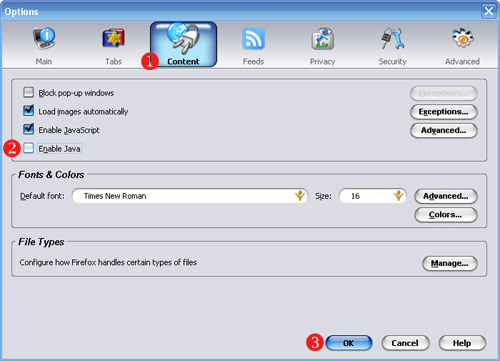
- If you’re really worried about your security, you might want to go a step further in setting up your Firefox browser and turn off Java. There’s a nasty security bug in the most recent release of Java that allows a malicious script author to figure out what IP address your computer has been assigned EVEN IF YOU ARE USING TOR. We don’t worry too much about this because we don’t think that Wordpress.com or Google are running these malicious scripts… but it’s something to seriously consider if you’re using Tor for other reasons. To turn off Java, go to “Firefox -> Preferences -> Content” and uncheck the box for Enable Java.

java

- If you’re the only person in your country using Tor, it becomes pretty obvious - the same user is the only one who accesses the IP addresses associated with Tor nodes. If you’re going to use Tor and you’re worried that an ISP might be investigating Tor use, you might want to encourage other friends to use Tor - this creates what cryptographers call “cover traffic”. You also might want to use Tor to read various websites, not just to post to your blog. In both cases, this means that Tor is being used for reasons other than just posting to your anonymous blog, which means that a user accessing Tor in an ISP’s server logs doesn’t automatically make the ISP think something bad is taking place.

A final thought on anonymity: If you don’t really need to be anonymous, don’t be. If your name is associated with your words, people are likely to take your words seriously. But some people are going to need to be anonymous, and that’s why this guide exists. Just please don’t use these techniques unless you really need to.

Index of steps involved

Introduction
Disclaimer
Step 1: Disguise your IP
a) Install Firefox.
b) Install Tor.
c) Install Torbutton.
d) Turn on Tor in Firefox and test it out.
Alternative instructions
a) Download XeroBank Browser (xB Browser)
b) Test that XeroBank Browser is working
Step 2: Generate a new, hard to trace email account.
a) Choose a webmail provider.
b) Turn Tor on in your browser, or start XeroBank.
c) Make sure you’re able to log onto the mail service.
Step 3: Register your new anonymous blog.
a) Turn Tor on in your browser.
b) Wordpress activation link.
Log into your new blog.
Step 4: Post to your blog.
a) Write your blog post offline.
b) Log onto Wordpress.com.
Edit Timestamp.
Step 5: Cover your tracks
a) Securely erase the rough drafts
b) Clear your browser history, cookies and passwords from Firefox.
Some parting thoughts.
A final thought on anonymity.
Show your support!

Monday, September 08, 2008

Arrests of bloggers on the rise

Article 19 of the Universal Declaration of Human Rights declares:
Everyone has the right to freedom of opinion and expression; this right includes freedom to hold opinions without interference and to seek, receive and impart information and ideas through any media and regardless of frontiers.
The World Information Access Project at the University of Washington released a report that identified 64 bloggers, unaffiliated with news organizations, who had been arrested for the contents of their blogs between 2003 and 2008.


The growing number of such blogger arrests underscores the political importance of blogging around the world. WIA concludes:
After surveying our data, we predict that the number of blogger arrests will rise in 2008. The popularity of online blogs continues to grow and inspire more media coverage of arrest incidents. Countries are enforcing greater Internet regulation, which will only increase with the elections in China, Pakistan, Iran and the United States this year.
Trendsspotting blog reports "Blogs are a mainstream media world-wide and a collective rival to traditional media." So are you surprised if Iran considers a law to murder bloggers? Or if China arrests political blogger and co-founder of China’s Netizen Party Guo Quan? —apurba

Swivel


It is not known if bimal , the blogger who used to run maoistresistance and was arrested and
held in custody for 24 hours has been included in this list.
Blogger arrested in Kerala

Tuesday, August 26, 2008

Random links

Be Aware of Surroundings(BAOS)
A kolkotta based group

http://www.baos.qsh.eu/

http://www.counterviews.org/


Liberation archives
http://sanhati.com/liberation/

About Liberation

Liberation, the monthly central organ of the undivided Communist Party of India (Marxist - Leninist) (CPIML), was first published in November 1967. Through intense state repression and terror perpetrated by various political parties, the monthly continued to be published except for a brief hiatus in the early 1970s.

Issues of the monthly will be archived here till 1972.

While studies of the Naxalbari movement have continued over the decades, there has been a conspicuous lack of widespread availability of the literature of its main protagonist, the CPIML. Through this archive, we hope to fill this lacuna, thus enriching the debate for scholars and activists alike.

The archival material has been sourced from the personal collection of Suniti Ghosh, Central Committee member of pre-split CPI(ML).

**************************************************************

Right click on the below link and "Save as" or "Save link as"

Click here to read Liberation, 1967, 1st Issue [PDF, English, 13 MB] »

**************************************************************

For more issues -- http://sanhati.com/liberation/

Monday, August 18, 2008

Solidarity websites of activists arrested under the undeclared emergency in India

http://www.shikharahi.com/

http://freebinayaksen.org

http://www.binayaksen.net/

http://www.releaseajaytg.in/

http://ajaytg.net/
Note : Ajay T G has been released

A brief history of the pro Maoist presence on the Internet (1997-2008)

In the course of the last two years , that I have been present on the Internet,
I have been able to retrieve some information from various online sources
which I am posting here so that it may serve as a reference point for anyone
who is interested in this type of information.

A brief history of the pro maoist presence on the Internet with
reference to India.

Year 1997

Vara Vara Rao - The pro maoist poet appeared numerous
times on live chat on rediff.com
The transcripts of one such chat session is available at the link below.
Vara Vara Rao Chat Transcripts- July 1997

Year 1998
Interviews of Com Ganapathy , then the general secretary of CPI(M-L)
People's War appearing on the internet on rediff.com
Interview with Com Ganapathy.. CPI(M-L)PW - Aug 1998

This was followed up by rediff.com with a special article on the
CPI(M-L)People's War which was titled
Karl and the Kalashnikov- Aug 1998

Interviews with CCM Com Prasad of PU
All Revolutionary Ranks must unite - Nov 1998

Year 2002

In the year 2002, a pro naxalite sympathiser started
http://www.geocities.com/cpimlpwg(Currently deleted)

But nothing on the internet ever disappears.
http://web.archive.org/ maintains copies of web
pages as a part of its archive.

The website can still be accessed at http://web.archive.org/web/*/http://www.geocities.com/cpimlpwg

In fact some of the original documents of the CPI(M-L)PW can still be
accessed online through the above website

http://web.archive.org/web/20021012230004/www.geocities.com/cpimlpwg/docu.html

Some time in early 2005 , it is believed that the website owner made
the below provocative statement on his website.

Death Warrant
By the Suppressive actions of the comprador State Governments of Andhra Pradesh,Jharkhand,West Bengal,Bihar,MP,ChattisGarh the respective comprador Goverments have virtually signed their own Death Warrants.Buddhadeb Bhattacharyya,Chandrababu Naidu,Babulal Marandi shall perish.Peoples' War gives a call to all revolutionaries to take up arms and join the struggle for emancipation.Death to Buddhadeb Bhattacharyya,Chandrababu Naidu,Babulal Marandi .Long Live revolution.Inquilab Zindabad.

This emotional outburst was stated as the reason for the state security forces
who sent a notice to geocities.com to take down the website.
Geocities was only to too glad to oblige them.

The current status,background and origin of the webmaster of http://www.geocities.com/cpimlpwg is not know , but it is most
likely he/she was from Andhra Pradesh as CPI(M-L)PW
had a strong presence there.

Year 2003
Peoplesmarch.com(currently deleted) a pro-maoist magazine came
online this year
http://web.archive.org/web/20030823153035/http://peoplesmarch.com/

It was one of the most active online resources on the
revolutionary movement in India until May 2006 when according
to the editor Com Govindan Kutty the state intelligence bureau
threatened the website hosting provider who caved into state
pressure and deleted peoplesmarch.com

The exact statement can be accessed at a another website that the
editor set up on
http://peoplesmarch.googlepages.com/

Most of the back issues of peoplesmarch can today be accessed at
http://www.bannedthought.net/India/ via single-spark.net

On Feb.14 2008 the Ernakulam District Magistrate issued an order banning the publishing of the magazine in the district. The order was issued on the eve of Com. Kutty coming out of the jail on bail where he had been incarcerated on false charges. The real purpose for the arrest is now clear: to stifle freedom of expression in the country. The People’s March is an independent magazine that fearlessly seeks to present the facts without facing any pressure from advertisers or the government to sing to any tune.

The editor subsequently started peoples-truth.blogspot.com which some people believe is the new avatar of peoplesmarch but it is not yet registered as a magazine.

Year 2006 - The Blogging Revolution
By the year 2006 , the Web 2.0 communication revolution had begun and
blogs were an integral part of it.

Revolutionary Blogs
By doing a random search for certain key words, one can come across
several defunct pro maoist blogs like http://springthunder.blogspot.com/
which seems to have started in 2003 and http://naxalnext.blogspot.com/
and http://cpimaoist.blogspot.com/which started in 2006 some months
before this blog, but most of them failed to garner an audience or make any
impact and soon shut shop.

Naxalrevolution - June 2006
naxalrevolution.blogspot.com
The blog was not the first pro-naxalite blog, but it was the first to garner
a dedicated following and was quite popular on the Internet getting almost
500 unique visitors and 1000 page views on a daily basis during its peak.

The blogger who ran naxalrevolution posted under the name of abhay and
claimed to live in bangalore , in a post he that his intentions
for starting this blog was mainly to protest against the censorship of
peoplesmarch and to counter disinformation against social workers
and activists being carried out by some other blogs.

Within a short time the blog started carrying some press releases that seemed
to be from some Maoist organisations and which the blogger claimed he
received through email.This contributed to the popularity of the blog.

The blog mostly carried articles from mainstream media which were rehashed
to suit the tastes of maoist sympathisers along with media found online like
videos,audio,pictures and the occasional official press release from Maoist
organisations.

In October 2007 , the blogger made an unexpected U turn on his views
on the Maoist movement in India and in this post , made the following observation.

After following the Maoist movement closely
for the last one year and a study of the prevailing conditions

in the country I have come to the conclusion that
the armed struggle waged by the Maoists may not be
able to provide a lasting
solution to the problems
faced by this country and humanity in general, nor would I
follow , endorse or recommend this path to anyone else as of
today.


Some people believe that the split in CPI(Maoist) Karnataka ,where
a large section broke away and formed the RCP (Karnataka) which
seeks to function as a legal democratic organisation could
have influenced the blogger views .

The blog eventually ceased publishing for more than 6 months after
which some activity was observed in the months of August 2008, as
of writing this post the blog was active again but it seems it is only
temporary.

Resistance India - February 2007
http://resistanceindia.blogspot.com/
Resistance India was started by a blogger who knew
Mr Govindan Kutty , the editor of peoplesmarch. Resistanceindia
also became popular after it started carrying exclusive
press release of Maoist parties.

The blogger posted under the name of bimal and was based from Kozhikode,
Kerala. Resistance India had a diverse following and as per the statistics
displayed on its website it had received more than 15,000 unique visitors.

In August 2007, the blog was hacked by unknown sources.The AP SIB denied
hacking into the blog in this news article.

What most likely happened is that the blogger used the same username and password
for his blog and his profile on the social networking site orkut and it is more likely
his account was hacked into via orkut.

He subsquently started maoistresistance.

Maoist Resistance - August 2007
http://maoistresistance.blogspot.com/

Having already set up a successful blog at resistance india it was not
at all difficult for bimal to set up another one and within no time the
new blog also started getting large number of visitors.
As per the current statistics displayed on the website it has recieved
more than 26,000 visitors till date.

After Naxalrevolution stopped active posting Maoist resistance
emerged as the new center of the pro-Maoist blogosphere.

However it was not without it's consquences...
By then CPI(Marxist) government intensified its suppresion
of democractic' struggles of the people in Kerala and Bimal was arrested
in mid february and held in police custody for 24 hours
during which he was interrogated and threatened to stop his blog
or face the consequences.

The fact that the mighty Indian state feels threatened by a small
blog is an indication of the paranoia in the establishment.

A news paper article appeared about his arrest in the Hindu ...

Youth grilled for suspected Maoist links
Staff Reporter
The police are examining his computer and documents to verify his antecedents

Youth was an SFI leader earlier

Police intensify drive against naxalites


KOZHIKODE: A team of police officers on Wednesday night took into custody for interrogation a youth believed to be having links with the extremist Maoist group. He was released on Thursday evening.

The Vadakara police arrested the 25-year old from his residence in the Edacherry police station limits. Vadakara Superintendent of Police K. Natarajan; Assistant Superintendent of Police Anoop John Kuruvilla; and Vadakara Circle Inspector Jaison K. Abraham questioned him.

Senior police officials said the youth was a non-teaching staff at the Government Engineering College in the city. He was known by several names among his friends, employees and Internet community groups. The police also seized a computer as well as other documents to verify his antecedents.

Mr. Natarajan said that the police had kept a tab on the activities of the youth for some time. Recently he joined the clerical cadre in government service. He subscribed to extreme Left leanings. However his links with any Maoist group so far had not been established.

Earlier, he was a member of the Students Federation of India (SFI), student wing of the Communist Party of India (Marxist), and had also been the area secretary of the Nadapuram unit. He shifted his sympathies to extreme Left groups. He was also associated with groups such as Revolutionary People’s Front as well as Porattam, the police said.

Investigating officers are examining the contents of his personal blogs. The hard disk of his computer is also being checked to corroborate whether he had proven links with some persons recently arrested on charges of subversive activities.

The Hindu

Subsquently Maoist resistance was discontinued by the blogger.

Bimal made history unknowing as he became the first blogger to be
arrested in India solely on the basis of his online activities.
Currently it is believed that because of increased police harassment
and intimidation the blogger was forced to join some
pro-maoist mass organisations.


Chairman Mao says " Let a thousand blogs bloom "
Today there exist hundreds of pro-maoist blogs with
a large international following many of whom have an active interest
about the revoluionary movement in mainly three countries India,
Nepal and Phillippines.

There exist today many solidary sites like the french solidarity
Site - http://laltara.free.fr/

The press releases of many maoist organisations nowadays appear
in spanish,french on http://groups.yahoo.com/group/MAOIST_REVOLUTION/

Some maoist/pro-maoist organisations have their own blogs like

http://rcpkarnataka.blogspot.com/

http://tamilporali.blogspot.com/

http://rdf-2005.blogspot.com/

http://rpfkerala.blogspot.com/

A list of active pro-maoist blogs based in India
List of blogs linking to Maoist resistance
http://referer.org/list/78d1468a9fa119c96458d5598926c7d9

It is impossible to recollect or post the entire list of all the International blogs but
a large number of links appear on

http://mikeely.wordpress.com/

http://naxalrevolution.blogspot.com/search/label/Links

Each blog contains a number of links to other blogs of similiar content.
All one has to do is follow the links and you will be amazed at the number
of pro-maoist blogs out there.

New blogs can be found by searching for key terms like Naxal,
Naxalite,Maoist on http://blogsearch.google.com/ but a lot
of spam blogs make the process a little tiring.

Pro-Maoist presence on Social Networking Websites
There are thousands of Maoist sympathisers of Indian origin
present on social networking websites like orkut, facebook
who regularly interact and debate various issues.

Perils of Modern Day communications

The revolutions in communication technologies have today made it
possible to connect and collaborate at a level that was impossible
even a decade ago.However this has not been without its failings.

The recent assasination of Com Raul Reyes who was the spokesperson
of the FARC is merely a pointer in that direction.Com Raul Reyes was
assasinated after his satellite phone was intercepted by the CIA which
traced his call and handed over the exact co-ordinates of his location
to its Colombiancounterparts who then launched a full military assault
through air and ground troops.

It must be mentioned that the satellite phone which uses GPS
was a product of the US Military and so was the Internet.

Internet Surveillance
It can be assumed that all pro-Maoist blogs and email ids are under
surveillance thought there is no direct evidence...

There are thousands of illegal porn websites on the internet that sell
images of exploited women from India illegally.Other than contributing
enormous amounts of traffic to these website , the intelligence bureau
has not shut down a single porn website in the last 10 years, let
alone arrest those who profit from it.

But in the last one year alone at least one pro-Maoist blogger has
been arrested and several bloggers face constant harassment
through direct and indirect means.

As per what appeared in media reports www.ernet.in
is one of the central nodal agencies to monitor the internet in India.

Other than there is heavy duty surveillance from the states of
Maharashtra, Karnataka, Andhra pradesh and Tamil Nadu , it is not
known if this surveillance is done by state or central agencies.

Maoist leaders traced through the Internet and killed in fake encounters ?

While there is no direct proof to prove this there are at least two incidents
which arouse suspicions...

Murder of Com Sende Rajmouli
The karnataka state secretary was picked up from Kerala and shot dead in
Andhra pradesh. A news paper report in the Indian Express that appeared
the next day claimed a CD containing a list of websites was recovered from his body.

Is it possible that Com Sende Rajmouli was an avid internet surfer and that
he was traced after he visited some website ?

Murders of Com Gajerala Saraiah and Com Rama
Maoist Gajerala Saraiah (44) alias Azad alias Bhaskar and his wife and
member of the Maoist party, B. Aruna alias Rama, who were
reportedly killed in an encounter in AP had spent nine to 10 months
in a sleepy village near Belgaum.

A newspaper article which appeared in the Hindu claimed that Com Gajerala
and Com Rama lived in belagaum, Karnataka in a rented house and
while renting the house they had told the house owner that he worked
as a DTP technician. Now as some of you may know DTP stands for desktop
publishing and involves preparing ,editing documents on the computer.

Is it possible that in the process of making and editing of documents
he came online , and he was traced and murdered ?

This is something the human rights organizations must investigate.

Surveillance on blogs
Many blogs have installed visitor counters or statcounters which show
on a real time basis the visitors and their ip addressees.They can be
identified as they display the visit count on their blogs and
there are many invisible visitor counters too.

Even though the bloggers may have done it with good intentions in mind
it must be emphasized that it may not be too difficult for some groups
of people to access these visitor counters by hacking or breaking into them
through legal , illegal means.

Note - Naxalrevolution.blogspot.com does not collect any information
about its users other than those submitted willingly by the users, like
email id for email updates...

Hence we have this disclaimer

_________________________________________________
..End of Article..
_________________________________________________

This is not a comprehensive or complete list.Any errors or
misrepresentations if any are regretted.If you can find any mistakes
or have something to add, you
can email me at naxalrevolution(at the rate ) gmail(dot ) com

The information published above is accurate to the best of my knowledge
and is wholly based on information sourced through the Internet.

Other resources on censorship in India

Committee to protect Bloggers - India

The Discreet Charms of the Nanny State

Harrassment of Tehelka.com and other incidents - Reporters Sans Frontiers

Censorship in India - Wiki

Indian Bloggers Collective on Censorship

Wednesday, July 23, 2008

Shimoga: Now Naxals have a blog too!

Shimoga July 21: The Naxal discourse of the State has found new space in blogosphere. Titled www.rcpkarnataka.blogspot.com, the blog presents details about the evolution of Maoist movement in the State, its strategies and split in the movement. Though there are a number of blogs on Maoist struggle across the world, rcpkarnataka is the first blog which is dedicated for discussion about the movement in the State.

The blog is promoted by Revolutionary Communist Party Karnataka, the breakaway faction from CPI (Maoist) Karnataka. The blog has interesting discussion about the reason for the split in the Naxal movement in the State. Though a section of party activists raised pertinent questions about hierarchies in party structure, but a discussion on the same was not allowed. The promoters of the blog said that absence of inner-democracy in the party resulted in the split.

The document "Our work in urban areas" prepared by CPI(ML) (people's war) of Andhra Pradesh in 2001 was immediate reason for the split of party's Karnataka unit. According to 2001 census only 27.8 percent (35 crore) of the Nation's population reside in rural areas. Urban areas contribute 60 percent of the GDP at present which is likely to increase in coming days. Taking the census report as referral point, a section of workers felt that party should consolidate its base in urban areas.

When the issue was neglected, they came out of the party and formed Karnataka Maoist Independence Centre an ad hoc body which was later renamed as Revolutionary Communist Party Karnataka in August 2007.

Introducing history

The blog presents details of the evolution of Maoist struggle in the State. According to a posting, Karnataka unit of CPI (Maoist) was formed in the year 1980 in Bangalore, open revolutionary magazine released in 1983, human rights organisations formed in 1984 and PRs (professional revolutionaries) were recruited next year. After failure to establish base in Raichur, party recognised Malnad as perspective area and in the year 2001, 25 comrades were sent to Malnad.

The blog states that RCP Karnataka wants to re-orient and re-organise the urban work with long-term strategical approach. RCP wants to establish base in urban areas through secret and open revolutionary mass organisations and legal democratic organisations. The blogspot also discusses in detail about the importance of media management to reach the mass. RCP has decided to mobilise large chunk of work force in unorganised sector (including those in ITES/BPO) in its favour.

RCP has also analysed the reasons of failure of Maoist struggle in the State. According to a posting in the blog, choosing Malnad as perspective area was strategic goof up as though Malnads topography favoured guerrilla warfare but the region was relatively developed with people growing commercial crops. RCP is also critical about Venkatammanahalli incident in which group of armed Maoists had opened fired on police. According to RCP any military action needs political justification but there was no strong justification for Pavagada incident due to which party was disgraced in the eyes of the public.

The blog has several links like kranthiya gathitarka, kalachida kondiya beseyuva prayatnadalli and others. RCP has underscored the need for going tech-savvy in coming days and foraying into the blogosphere seems to be first step in this regard.

The Mangalorean

Friday, May 25, 2007

Blogspots betray proof of Naxal ambitions

Originally posted by Bhumkal

Linke via Resistanceindia

Blogspots betray proof of Naxal ambitions

NAGPUR:Naxalites, who have their presence in more than half of the Indian states are now trying to go global, with the modern-day facility of Internet blogging. It is now out in the open that the Naxalites, or in the recent times the Maoists, have created a flood of the blogspots and Internet user groups to promote their ideology as well as to defame the Government.

Blogging, which has provided a new means of expressing oneself on the internet so that others may read it, has attracted the attention of the Maoists also. Many top websites provide the space for blogspots as well as host the Internet user groups under various categories.

The Maoists have started making full utilisation of these facilities. Even if one types the word Maoist in any search engine, the results display a number of blogspots and user group addresses. Notably, a most popular and controversial user group has several communities titled after some keywords like "Maoist movement"," Naxalite movement", "Resistance", "Naxal revolution", etc. The links to blogspots also open from these communities.

Interestingly, though the owners of these communities have given their names, possibility is that they might be fake. There are communities that are owned by Bhagat Singh and The Chairman. These communities have ?forum? to discuss various current subjects. Besides, they conduct regular polls on various topics. The introduction of these communities clearly state that they have been formed to promote and discuss Maoism and Naxalism, and to further the ?movement? or ?revolution?.

Some of the pro-Maoist Internet user groups also display newspaper cuttings, poems on the latest happenings at Nandigram, and some even have the videos. Notably, though the members of a single community or user group seem to be just around 200, the combined membership may well account for an unthinkable number. Naxalite movement, Resistance, Naxal revolution, etc. The links to blogspots also open from these communities.

Global presence: An Internet user group has a map of the Maoist spread across the globe. The map shows the highest density of Maoists in North America, Europe including the United Kingdom, and India. The map highlights the presence of Maoists in African continent, Australia, South America, and the other parts of Asia including Pakistan. This clearly sends the message that in addition to terrorism, Maoism is trying to spread its network across the world.

Hind vada

Monday, April 02, 2007

Pro-Maoist blogger threatened

Nepali Blogger Threatened

Umesh Shrestha, the blogger behind hugely popular MySansar.com, has been threatened of ‘action within 24 hours if he publishes anything that directly or indirectly supports Maoists ’.

An email with subject line reading ‘last information’ by Maoists Defense Group, an anti-Maoist group not known so far, has threatened him.


From: Maoist Defense Group <>
Date: 02-Mar-2007 15:13
Subject: आन्तिम जानकारी
To: salokya@gmail.com
उमेश जी,
माओबादीलाई प्रत्यक्ष वा अप्रत्यक्ष रुप सहयोग वा हौसला वा आतन्कारी समुहलाई सहयोग पुग्ने कुनै पनि कुनै पनि समचार आजैका दिन देखी Post नगर्नको लागी तपाईलाई आन्तिम जानकारी गराइन्छ! यो मेल लाई कुनै Junk Mail वा फर्जी Mail को रुपमा लिएर नियम उलङ्घन गरेमा त्यसको कार्बाही २४ घन्टा भित्रमा देख्न पाउनु हुनेछ!

प्रचार बिभाग सचिब
प्रतिका(बिदेश बिभाग)

Remark:
यो सङठनको बिस्तार १२ वटा देशमा भैसकेको,५९ सदस्य केन्द्रिय कमिटि रहेको र केन्द्रिय कार्यालय चितवनमा रहेको र माओबादी बिरुधको पहिलो चरणको कर्बाही १-३ चैत्रमा गरिने जानकारी गराइन्छ!

Nepalivoices.com


Naxalrevolution along with other pro-maoist bloggers based in
India strongly condemns the threat and extends its full support and
solidarity to Pro maoist bloggers in nepal.

Friday, December 29, 2006

The world is listening. Are you talking? Global: Now Spelt Blogal

The world is listening. Are you talking?


Global: Now Spelt Blogal

There’s a radical shift underway in how information is exchanged, says Shivam Vij after a recent international blogger summit

Something really big is starting to happen,” geek extraordinaire Ethan Zuckerman told a meeting of international bloggers at Harvard’s Berkman Center for Internet and Society in 2004. “What I’m really curious about is whether we’ll find ourselves becoming a movement.” Two years later, that was no longer in question, as Zuckerman’s Global Voices (GV) — co-founded with former cnn correspondent Rebecca McKinnon — held its second annual summit at Delhi’s India Habitat Centre last week. The issue now, as participants agreed, was not whether blogging is a movement, but how they are to take the blogosphere’s trans-continental conversations forward, far enough to dent the mainstream media’s predominantly Western coverage of events. At one point during the conference, Bala Pitchandi from New Jersey asked via webcast what GV’s long-term goals were. “Total world domination,” replied Zuckerman, as laughter lit up the room.

The important role that bloggers could play within and without the newsroom became clear for the first time in 2003, when an architect in Iraq who called himself Salam Pax started blogging the Second Gulf War. Ever since, the international media has often turned to bloggers in conflict zones to bring local perspective to their coverage. For GV, this has been central to its project — prominent bloggers from around the globe are roped in as regional editors who would write posts linking to blogs, explaining the context they were written in, thus making local issues accessible to a global audience. “The nature of conversation in the blogosphere tends to be insular,” says Neha Viswanathan, GV’s South Asia editor. “Bloggers in a country tend to speak only to each other. We add the context to posts and offer them to a global audience.”

The aim is to provide media spaces that bypass State controls to get citizens across the world to speak for themselves
However, GV is more than a bloggers’ community. With free speech at the core of its manifesto, it aims to provide media alternatives that bypass government controls to get citizens across the world to speak for themselves. Contrasted with mainstream media practice, GV’s approach to information sharing, for instance, encourages people to ask why a particular story is not picked up by its editors. When questions were raised, at the summit in Delhi, about biases and information imbalances within GV’s coverage, Trinidadian blogger Georgia Popplewell, a GV co-managing editor, gave the example of a Cuban who wrote in to say GV wasn’t covering his country well. To correct the shortcoming, Popplewell hired that blogger as Cuba editor.

The stories GV covers come overwhelmingly from the developing world, ignoring almost all of Western Europe and North America. (GV has been anxious to not be seen as an American site — which is partly the reason for its registering in the Netherlands.) For journalists, it is a mine of contacts and story ideas; mainstream media too often turns to it for help with on-the-ground reportage. During April’s revolution in Nepal, bbc World picked up GV’s Nepal contributor, Parmendra, for a chat. Israel’s bombing of Lebanon and the Mumbai train blasts were two big events on which GV provided dedicated feeds to Reuters, one of its sponsors. Along with foundations like MacArthur and the Dutch NGO Hivos, Reuters also funds GV because it realises that the proliferation of individual voices on the Internet has influenced the way information is exchanged.

However, despite its democratic emphasis, issues of access persist — in every country, computer usage remains confined to the elite. How do we hear what farmers in India or street kids in Vietnam have to say? Further, while English is the dominant medium on the Web, it is not what most of the world talks in. GV is trying to expand its linguistic frontiers — it already has a Chinese version, and there are a handful of editors who read posts in other languages and discuss them in English. Oddly, however, when the issue came up at the conference, of all the Indians in the room, not one was willing to be a GV Hindi editor.

There was also some brainstorming during the summit on using software like tor to bypass Internet censorship and what GV could do for bloggers who find themselves under government suppression. “In Arabian blogospheres, human rights, free speech and democracy are topics of constant discussion,” says Amira Al Hussaini, Middle East and North Africa editor. “With strong media censorship, online self-publishing becomes an important outlet”.

“The world is talking,” goes GV’s tagline, “Are you listening?” For the innumerable conversations that GV fosters every day, Zuckerman could as well say: the world is listening, are you talking?

http://www.globalvoicesonline.org/

Link

Friday, December 22, 2006

How to blog anonymously - Handbook for bloggers and Cyber-dissidents

On this blog we don't blog anonymously
simply because this blog does not carry any material
which is against the law of the land and
neither do we encourage people to engage in activities
that may be deemed illegal by the constitution of India.
This blog only publishes news reports from the mainstream media,
academic sources and personal reports of individuals for
educational and informational purposes.

At any time if you find any content objectionable and provide
valid reasons to justify it's removal then we will always do so,
all you got to do is drop us an email.

However if you have sensitive information or a radical viewpoint
which you need to disclose to the world but you think that
doing so might compromise your safety ?

Then

Reporters without borders has the right book for you


Contents:
Bloggers, the new heralds of free expression
What’s a blog ?
The language of blogging
Choosing the best tool
How to set up and run a blog
What ethics should bloggers have ?
Getting your blog picked up by search-engines
What really makes a blog shine ?
Personal accounts:
- Germany
- Bahrain
- USA
- Hong Kong
- Iran
- Nepal
How to blog anonymously
Technical ways to get around censorship
Ensuring your e-mail is truly private
Internet-censor world championship


Download this handbook to take printouts below


http://www.rsf.org/IMG/pdf/handbook_bloggers_cyberdissidents-GB.pdf


Website Reporters Without Borders

http://www.rsf.org/rubrique.php3?id_rubrique=542


There is also another handbook by
Electronic Frontier Foundation
How to Blog Safely (About Work or Anything Else)


Let's hope some of you will find these resources useful
and will make use of them.

Once you have a blog drop in a mail or a comment on this blog
and we will post a link to your blog if we think it deserves to reach
a wider audience.

Regards

Team Naxal Revolution